Work
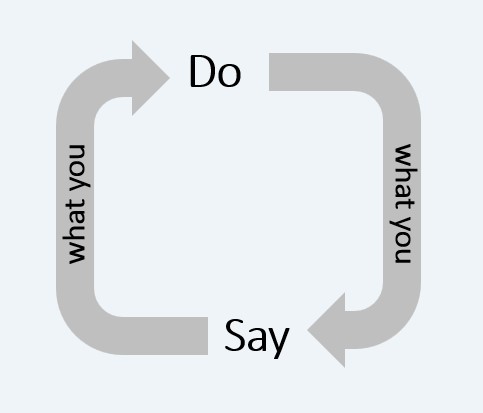
It’s a simple flywheel
Principles
My experience with the flywheel,
Practice
- It’s an incredible compass for any interaction across the corporate hierarchy- up, down, sideways, outwards. And even though each company’s and person’s principles (and values) differ, this flywheel fits in easily.
- The right ‘think’ leads to the right ‘say’ and ‘do’. The right think comes from Simon Sinek’s ‘start with why’ tenets.
- It’s a great guide for leading and managing people in teams. Have a mix- some doers, some thinkers, some dreamers. Be flexible- the same person’s role could change depending on the project or situation. Watch out for Lencioni’s 5 dysfunctions of the team.
Outcome
- It creates a virtuous cycle of kinetic motion (rotational energy is proportional to the square of the velocity), in yourself and the team.
- The corollary- Negative practices (don’t do what you say, say what you don’t do) build a vicious cycle. And it remains square-powered as it rotates.
Models
Assessing and labeling humans is at best tricky. Yet there’s a whole industry for it. At work, it was intriguing to participate in those evaluation and feedback exercises. Mandatory when transitioning to team management. The results:
- Myers-Briggs or MBTI classifies me as an ESFJ (Consul)
- StandOut identifies me as an Equalizer and Stimulator
- Enneagram characterizes me as Type 8 (Challenger) with Wing 9 (Peacemaker)
As for the work itself, these are the frameworks that I use (and keep refining):
- Go To Market (GTM), divided into,
- Strategy and context = Customer pain point (use-case), Solving the challenge, Business opportunity (TOWS analysis), Competitive landscape
- Execution = Campaigns (content, program | outbound, sales enablement), Resources (time and money), Eisenhower matrix
- Core messaging and positioning, created using,
- Kipling method i.e. 5W1H (who, what, where, when, why, how)
- FAB structure (feature, application, benefit)
- Measurement, using 3Rs of metrics (revenue, reputation, relationships)
Samples
One body of work remains memorable among numerous projects over the years. An image on paper, redrawn from the whiteboard, that turned into an award-winning campaign for customer engineers and developers, named myPlanNet.
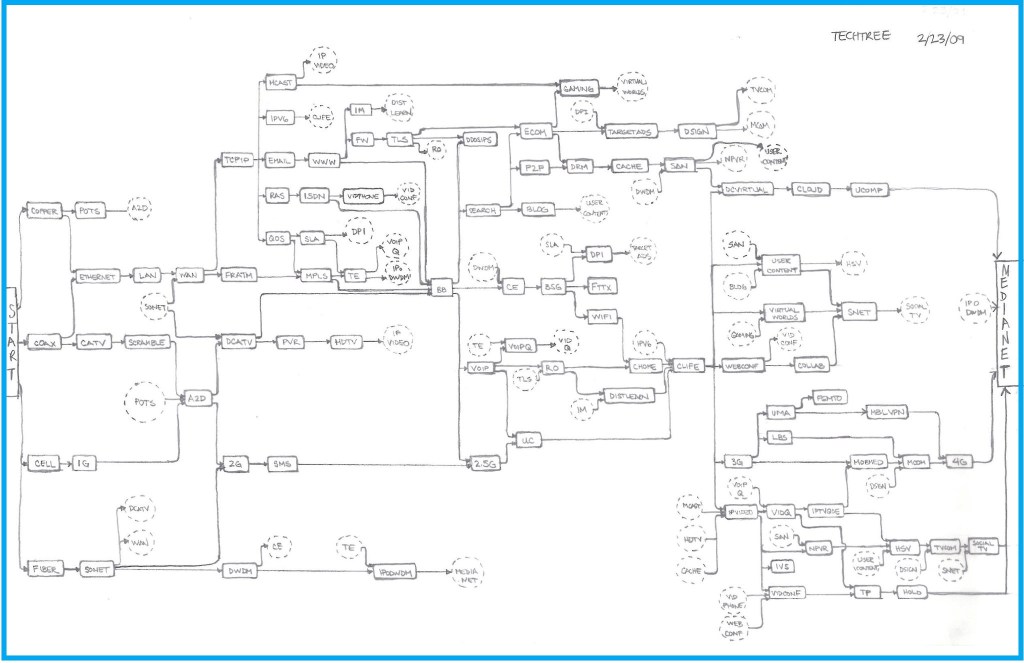
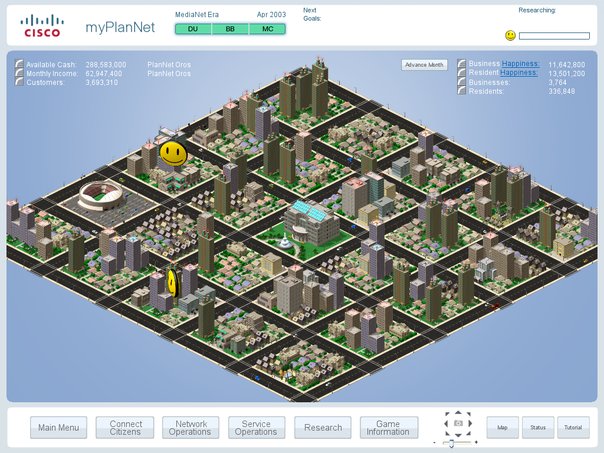
It also got featured in the Harvard Business Review as an example of generating customer loyalty with brand building in a highly technology-centric business. Continuing the campaign the following year, we created another award-winning asset: a “Lord of the Flies” themed IPv6 business-case video.
Know-how
Through the years, I’ve found that learning anything gets amplified by teaching it to others. Need to jump-start newly acquired K8s knowledge. Explain it to someone not familiar with it. Use the whiteboard. Apply the FAB framework. Likewise, I’ve been a beneficiary of generous teachers and practitioners. People are truly the best source of knowledge. And there’s always the Internet – check out the Wall for inspiration.
I’ve been fortunate to have worked across the technology stack (layer 0 through 7 of the OSI model) developed on a variety of hardware and software platforms. Of course, am mindful of layer 8. After all, people produce and use products.
My 3Es (experience, exposure, education) of career development are an ongoing evolution like they should be. The current ones are on LinkedIn.

The value of achievement lies in the achieving
– Albert Einstein, October 1950
 Pravin Mahajan